Instructions for Restoring Old Embossed Leather Chairs
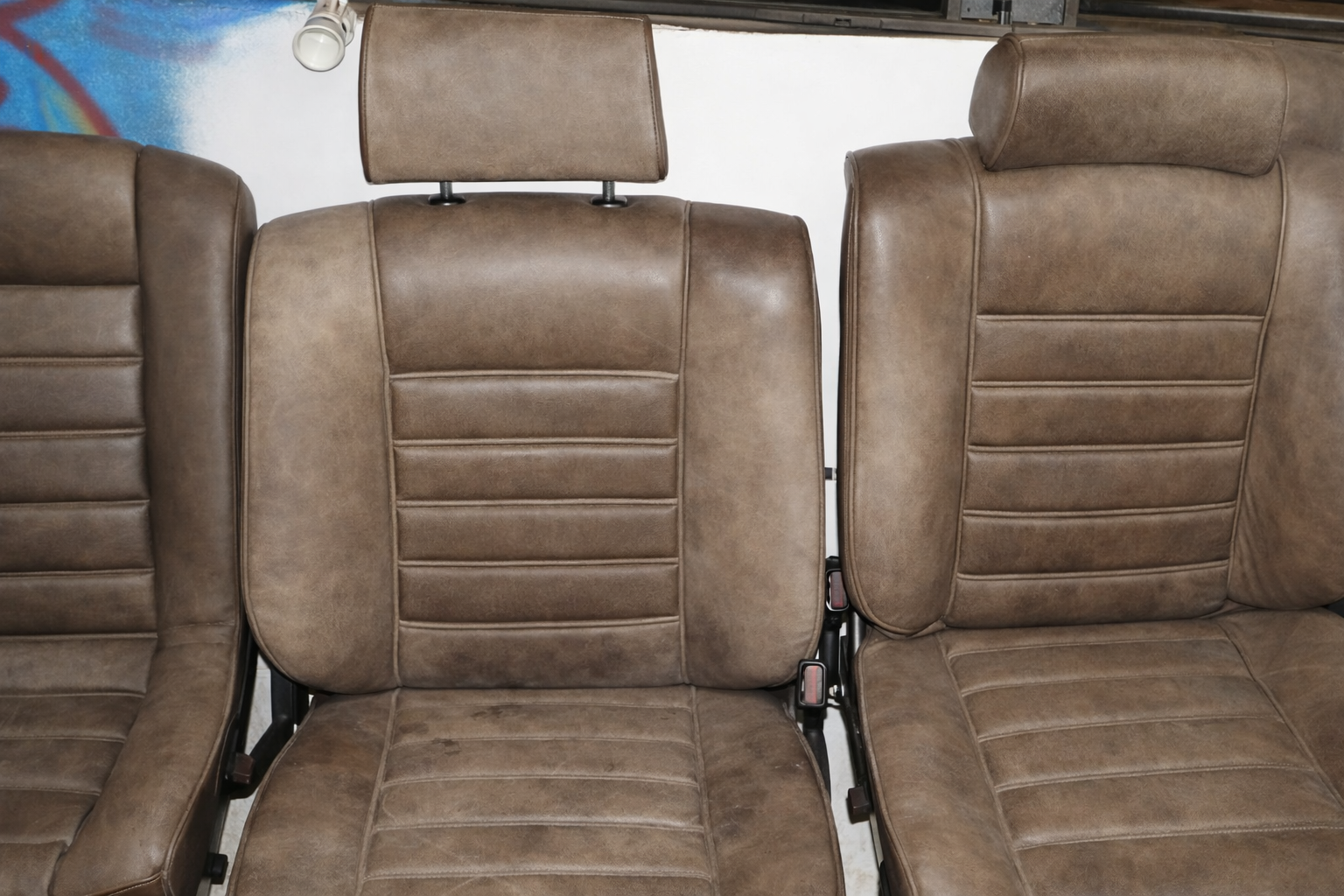
Antique chair leather is often very brittle, dry and sensitive. The degree of damage dictates how well the leather can be restored. Only very well-preserved leather can handle the restoration procedures. In most cases, the leather can however, be made beautiful again, but they are usually unsuitable for daily use. Avoid using these items extensively following restoration work, as otherwise the leather can be damaged very quickly.
Preparation
1. In case of heavy soiling, first remove the coarse dust or dirt with the COLOURLOCK Leather Cleaning Brush. Residual soiling should be removed with a slightly moist cloth with some COLOURLOCK Aniline Cleaner. Careful: Do not wet the leather excessively! This can damage old leather!
2. After cleaning, the leather must be wiped slightly with a mixture of 50% vinegar essence (25% solution) and 50% water. This alters the pH value and makes old leather more resistant.
3. If upholstery work is required or if the leather needs to be stabilized by gluing from the underside, any ornamental nails must be lifted out to avoid damage. Please note the following: When the heads are lifted, the opposite side of the nail head presses into the leather and often damages it. This damage should be avoided as much as possible. In addition, ornamental nails can also break (head comes off). It is therefore prudent to check whether you need to source the same ornamental nails or have them replaced entirely (size, colour, shape).
4. Hardened and brittle leather must be treated with COLOURLOCK Licker Oil. Apply a mixture of 20% Licker Oil and 80% warm water. Allow to retract and repeat several times. Two to three treatments are sufficient.
5. After the Licker Oil treatment, degrease the repaired surface with COLOURLOCK Degreaser.
Repairs
As such leather is often brittle or leather parts are missing, extensive repairs may be required.
CRACKS AND RIPS: To repair cracks, degrease using
COLOURLOCK Degreaser. and prepare the repaired areas with COLOURLOCK Primer. Apply the primer with a sponge. The primer improves adhesion. After drying the primer (primed surfaces remain sticky after drying), fill the cracks with COLOURLOCK Fluid Leather. Large cracks or tears must be glued on the underside with thin leather or a flexible but resistant fabric with COLOURLOCK Leather Glue. This reinforces the damaged area and stabilises the leather.
HOLES: Holes must be filled by placing a matching piece of leather to cover up any missing leather (usually vegetable tanned leather). Cut a piece of vegetable tanned leather to fit into the hole. Use a thin resistant cloth and glue it to the back. Ensure you also glue the repair patch from above and fill the contours with
COLOURLOCK Fluid Leather. Vegetable tanned uncoloured leather is usually too light and it is effective to adjust the colour prior to repairing with COLOURLOCK Antique Finish.
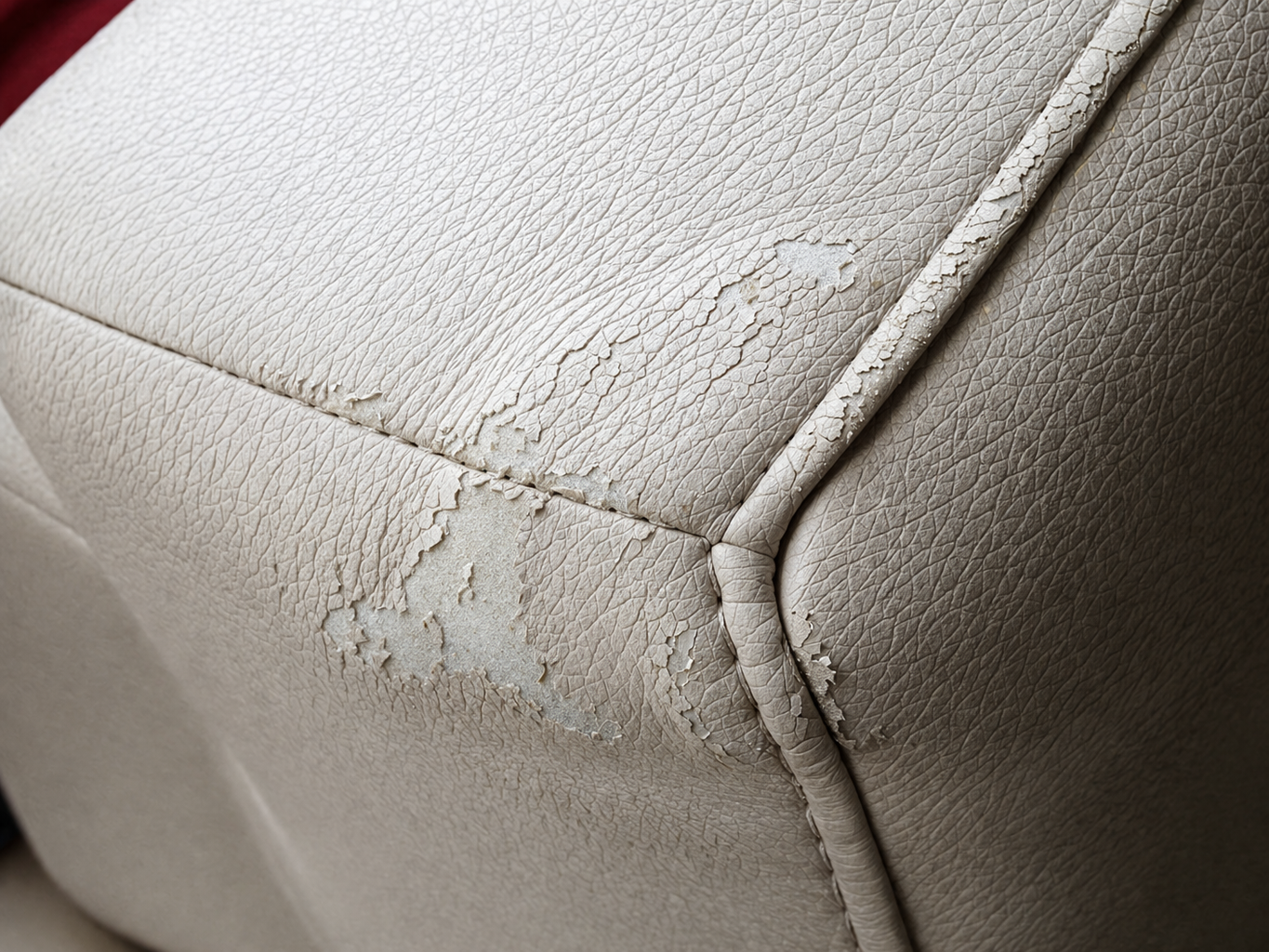
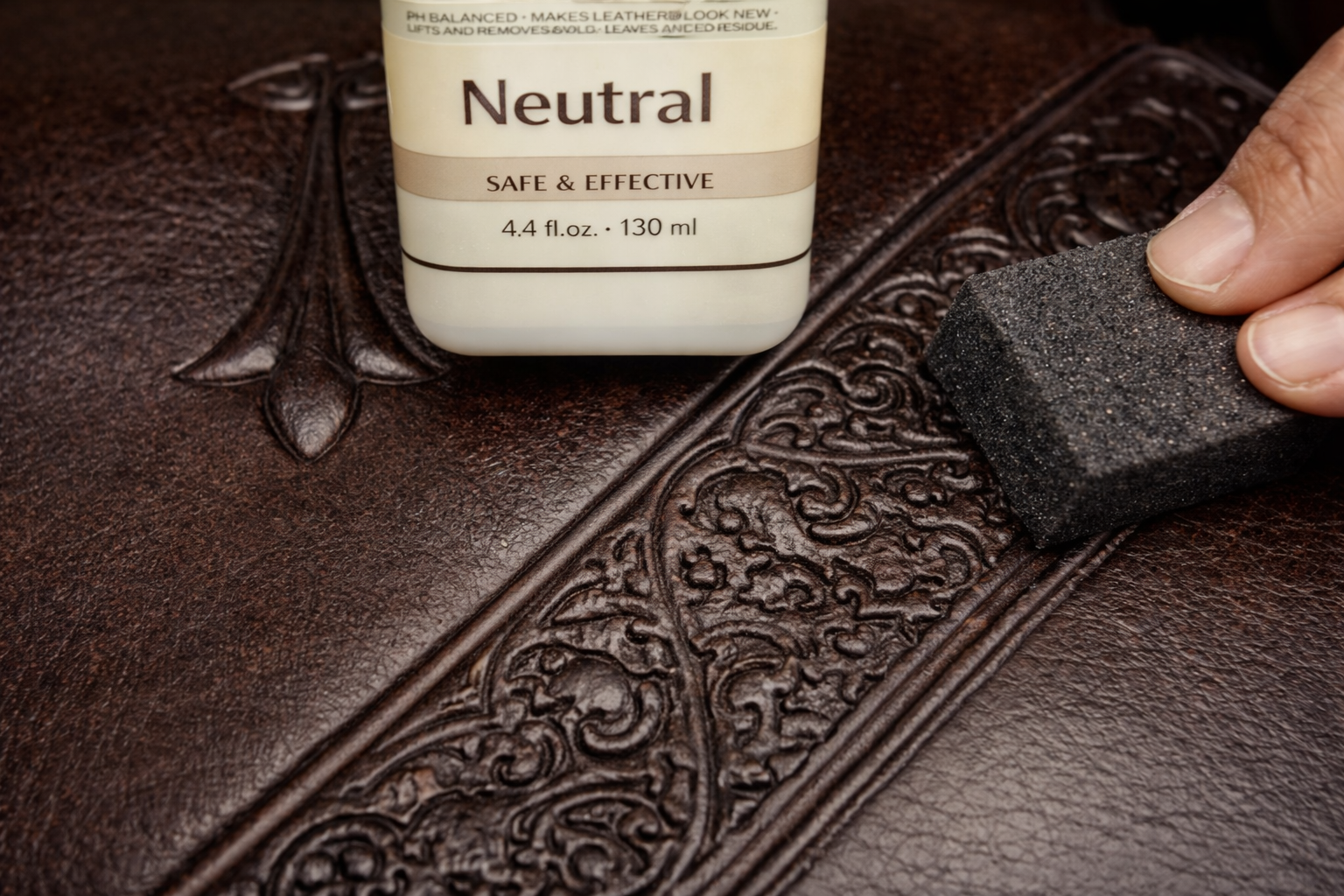
BRITTLE SURFACES: In case of larger brittle surfaces use COLOURLOCK Neutral Binder. Neutral Binder is a strong binder which stabilizes scaly, brittle leather and makes it more resistant. Apply the Neutral Binder after priming with a sponge and allow to dry on its own. Repeat this process several times. Once dry, the Neutral Binder can be sanded using the COLOURLOCK Leather Sanding Pad to achieve a smooth surface.
For areas where filling is required, Fluid Leather is first choice. The Neutral Binder is to be used for surface damages. The Fluid Leather cannot be sanded and is too tight for a surface application.
Colour refreshment and care
1. After the repairs adjust the surface colour using COLOURLOCK Antique Finish. The Antique Finish is applied with a sponge after priming. For very rough surfaces, smooth the surface with the
COLOURLOCK Leather Sanding Pad before applying the Primer. The Antique Finish gives the colour the necessary shine, and provides the surface with an increased gloss effect.
2. Finally, apply COLOURLOCK Elephant Leather Preserver. This treatment should be repeated approximately every 6 months for preservation.
Required quantities for roughly 3 to 6 chairs
COLOURLOCK Leather Cleaning Brush - 1 unit
COLOURLOCK Aniline Cleaner - 50 ml
COLOURLOCK Licker Oil - 250 ml *
COLOURLOCK Degreaser - 225 ml
COLOURLOCK Primer - 250 ml *
COLOURLOCK Fluid Leather - 1 tube 20 ml *
COLOURLOCK Neutral Binder - 250 ml
COLOURLOCK Leather Glue - 1 tube 20 ml *
COLOURLOCK Backlining Cloth - about 15 x 25 cm
COLOURLOCK Antique Finish dark brown - 250 ml *
COLOURLOCK Leather Sanding Pad - 1 unit
COLOURLOCK Elephant Leather Preserver - 1 tin 125 ml
* These products are not available to purchase directly on our website. Please contact our team to place your order for the above products.
 |
 |
 |
 |
| Unproblematic: Licker Oil, colour refreshment, care. | Neutral Binder, partially Fluid Leather, colour refreshment. | Repair rip with Fluid Leather, colour refreshment & care. | Too damaged. New leather is recommended. OK, as no embossing. |
 |
 |
 |
 |
| Before | Degreasing with Leather Cleaning Spirit | Leather Sanding Pad | Gluing on reverse |
 |
 |
 |
 |
| Leather Glue | Primer | Fluid Leather | Neutral Binder |
|
 |
||
| Antique Finish | After |